A Work in Progress: How Mount Sinai Parenting Center Is Bringing the Science of Child Development into Pediatric Education

A Work in Progress: How Mount Sinai Parenting Center Is Bringing the Science of Child Development into Pediatric Education

With 7,400 physicians on staff, New York City’s Mount Sinai Hospital is one of the nation’s oldest and largest teaching hospitals. More than 16,000 babies are delivered in this hospital system every year. The pediatric hospital provides everything from primary care to liver transplants. Mount Sinai’s pediatric residency program takes on 22 new doctors per year. Recently, this highly regarded program has undertaken a revolutionary new approach to training, which may be destined to transform pediatric education all over the country.

The Keystones of Development curriculum, an online, self-directed platform, currently is being piloted at eight residency programs across the country. Preliminary results are encouraging, with significant shifts in pediatricians’ knowledge, behavior and confidence. The modules are winning praise from residents. One used all caps in her concise review: “I LOVE THEM.” Another commented “It’s something that I started using the very next day with a lot of my parents.”

This week, Keystones of Development is taking the next step on its journey to scale, with a workshop at the annual gathering of the Association of Pediatric Program Directors in New Orleans. The goal is to get this curriculum into every pediatric residency program in the country.

To understand this breakthrough, think about how preventive medicine—for example, immunizations and antibiotics—has changed medicine in recent decades. Children are surviving diseases that were once considered death sentences. At the same time, pediatricians are seeing an increase in behavioral and developmental issues and are fielding questions from parents regarding tantrums and timeouts.

Noticing these trends, Dr. Blair Hammond, 2010 winner of the Mount Sinai Excellence in Teaching Award, found herself frequently seeking the advice of her friend, Dr. Aliza Pressman, a developmental psychologist. The Division Chief of Developmental Pediatrics at Mount Sinai, Dr. Eyal Shemesh, was enthusiastic about inviting Dr. Pressman to teach about the everyday questions that parents have regarding their children’s behavior and emotional development, with a focus on promoting optimal development. Eventually, this partnership gave rise to the Mount Sinai Parenting Center, with Dr. Carrie Quinn coming on as executive director. Another member of the interdisciplinary team was social worker Mariel Benjamin, from the department of maternal child health. The Mount Sinai Parenting Center’s first big undertaking: the reinvention of how pediatric residents are trained.

All pediatricians must complete at least a three-year residency. They learn about how to care for premature babies, how to diagnose meningitis and which vaccine to give. They study the treatment for pneumonia and the signs of autism. Historically, however, they’ve been missing one huge piece of the puzzle—the developing mind.

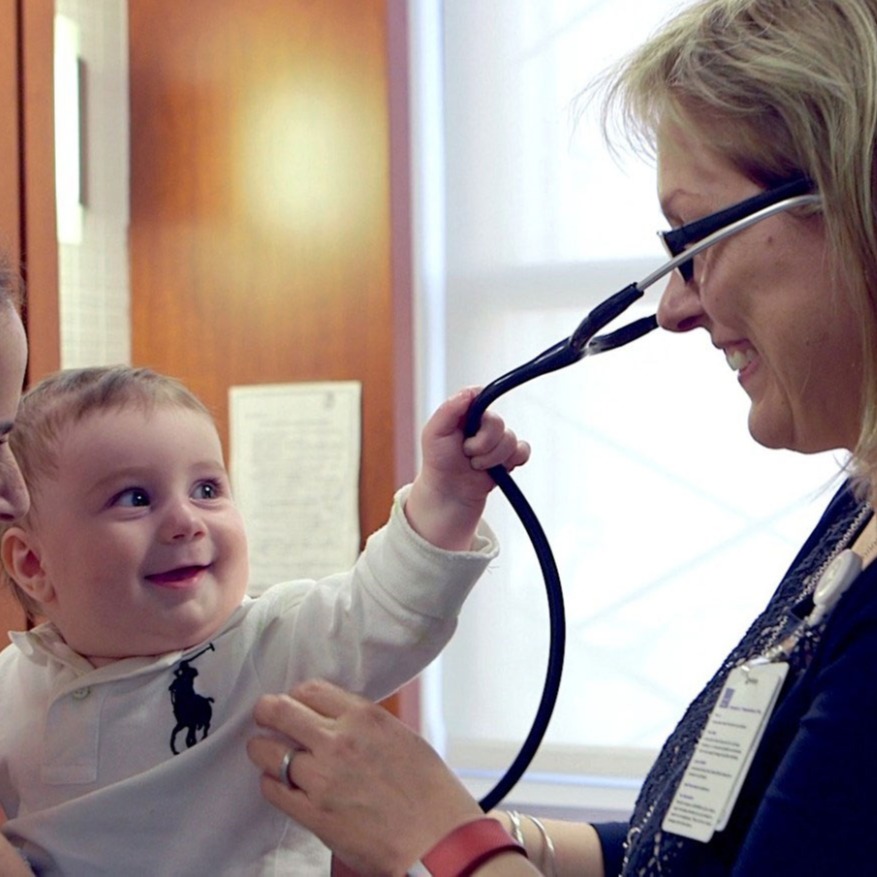
“We have people who are new to being doctors,” Dr. Hammond says, “meeting with people who are new to being parents.” On both sides, there’s a feeling of inadequacy, and in between them is the child—who’s new at being a person.

One of the first resources that the team turned to was Ellen Galinsky’s Mind in the Making (2010), a groundbreaking and highly readable synthesis of research on mental development. Galinsky summarizes recent experiments illuminating the elasticity of baby’s brains. “Yes, babies’ capacities are truly amazing,” she writes. “But even more amazing is that we now know how to take advantage of these capacities to help babies, and their older sisters and brothers, develop the essential life skills that will serve them throughout their lives.”

Although the text was considered too deep a dive for Sinai’s residents, the center continues to use it for social workers, child life specialists and other professionals. For pediatric residents, finding time for educational initiatives can be difficult. Eighty-hour weeks and the stress of being thrust into new situations contribute to fatigue and anxiety.

“It’s about fitting teachable moments into care. Everyday health care moments become opportunities to impart broader parenting skills.” —Aliza Pressman, Ph.D.

One thing became clear: residents wanted not only foundational knowledge but also tips on what to say in the exam room with patients and families. How could new doctors learn to fit this script into their brief 15-minute well visits with children? That was the challenge.

“It’s about fitting teachable moments into care,” says Dr. Pressman. “Everyday health care moments become opportunities to impart broader parenting skills.” Take a routine vaccination, for example. The program reminds residents to notice how parents comfort their children and how powerful that connection can be in helping their child get through a difficult challenge. Another tip for the new doctors is giving young patients the option: Do you want me to examine your ears first, or your eyes? And then turning to the parent and observing that being able to make choices increases a child’s sense of agency.

Knowing the audience is a key to the curriculum’s philosophy. According to the American Board of Pediatrics, 70 percent of pediatric residents are women. Dr. Hammond notes that 60 percent are graduates of U.S. medical schools, with the remainder coming from foreign medical schools and from institutions like St. George’s University School of Medicine on the Caribbean island of Grenada, which specializes in training American students. They are mostly in their mid- to late- twenties, and most don’t have children of their own.

Keystones of Development is free, quick and even accessible on a smartphone—in other words, it’s made for millennials. Each of the twelve modules focuses on a small number of concrete skills for building vital parent-child connections.

For Dr. Pressman, Sinai’s program embodies the principle that every health care encounter is an opportunity to foster supporting parents and families. She notes that 99 percent of children are born in a hospital. “That’s an opportunity,” she maintains, “to meet parents where they are and provide them with tools and support from the beginning.” These opportunities continue throughout the first five years, with an average of 15 well-child visits and numerous sick visits.

In many instances, the pediatrician is a parent’s only trustworthy source of information and encouragement. The Mount Sinai Parenting Center is making sure these doctors are equipped to model and support behavior that promotes development. Something as simple as how parents speak to their infants can make significant differences in the their language development. “It takes 30 seconds, and it truly matters,” Dr. Pressman says.

As she prepared for the New Orleans conference, Dr. Hammond reflected on the magnitude of their undertaking: “We’re trying to change the whole culture of pediatrics.”

The Keystones of Development curriculum is free to all training programs. To find out more, contact Sarah Whitney at (212) 241-2772 or sarah.whitney@mssm.edu.

Reprinted with permission from Early Learning Nation
 

Darlene Clemens: A Champion for Science Nurtures an Early Learning Community

Darlene Clemens: A Champion for Science Nurtures an Early Learning Community

Becoming a community champion for science was not what Dr. Darlene Clemens of Port Angeles, WA, envisioned when she retired from a successful 36-year career as a teacher and a principal. “I was going to learn French; I was going to learn how to play the piano and travel,” she said.

Her plans began to change in 2013, when Clemens wrote a letter to Ellen Galinsky, author of Mind in the Making: Seven Essential Life Skills Every Child Needs. And so began a five-year correspondence with the then-stranger Galinsky affectionately now calls, “Dear Darlene.”

Galinsky describes how it happened:

In 2013, I received a letter from someone I didn’t know. She wrote, “My name is Darlene Clemens and I want to use your book Mind in the Making as a resource to the families and professionals in northwestern Washington State.”

Of course, I was thrilled. I have always likened writing and publishing a book to casting it into a dark sea. You never know where, when or even if it will bob up. Of course, all authors hope their books will make a difference.

In 2014, I heard from Darlene again. This time, I was more than thrilled: I was inspired. As the consummate educator, Darlene, along with her husband, Michael, accomplished something creative, fun and very sharable by organizing the Mind in the Making book into 93 practical mini-messages. These tips are sent every Monday morning to more than 1,300 parents and teachers in the Port Angeles public schools.

Because Clemens believes so strongly that research should lead to action, her work with the Mind in the Making (MITM) program has sparked other work in the schools. In the Jefferson Elementary School, the Mind in the Making booklists that promote skills are displayed on a bulletin board created by the school counselor, Vicki Rockholt, and children actively select skills in themselves to promote.

In the Roosevelt Elementary School, Principal Michelle Olsen, promotes brain-based instruction and trauma-informed practices, including a space where children who are feeling stressed can recover, learn how to self-regulate and develop life skills.

In October 2018, Galinsky traveled to Washington State to meet Darlene and Michael Clemens, to see the work in action, and to make presentations to families and professionals in this burgeoning early learning community.

Over a recent pancake breakfast with Darlene and Michael Clemens in lovely Port Angeles, Galinsky and Darlene discussed the beginnings of this early childhood initiative.

Galinsky: How did you find my book?

Clemens: I discovered Mind in the Making through Norma Turner. Norma’s an activist and has done wonderful things in the community. She started an organization called Prevention Works! that purchased 100 copies of Mind in the Making and gathered all kinds of people in the community to read them. And then we got together in small groups to discuss it. As I’m sitting at my house reading Mind in the Making — I was barely into it — but it was like “Where was this book when I was raising my kids?” So I just started outlining it because I knew I had to do something with it. I just didn’t know what.”

Galinsky (laughing): And that “what” became your need to synthesis the science of early learning into life skills available to parents and others who interact with children.

Clemens: Yes, in a letter to the community, I wrote: “Because I know how busy your lives are and how little time you have for reading an entire book, my husband and I divided the book into 93 mini-messages for you.”

Galinsky: This is brilliant. So you’ve completed this remarkable synthesis. What was the next challenge?

Clemens: Well, we needed a way to get the mini-messages out into the community. Since my background is in education, we began with the school system.In March 2014, I started attending school events again. I went to all of the Parent Teacher Organization meetings. I went to all the teacher-staff meetings. We have an event called Kids Fest in the early winter where parents bring their children, and I went there.

We started an e-list and organized it into groups: for families and for professionals. We have also created lists by children’s age, including babies, which led to creating a booklet just for babies that we distribute throughout the community. We also make bookmarks.

Galinsky: And now, four years later, are you still attending all these meetings and events?

Clemens: No, we no longer have to do that. This initiative has become part of the community fabric. Each fall, when the kindergarten teachers meet with parents, they sign them up to get the messages so all I have to do is add the new subscribers to our list.

Galinsky: Have you heard from people who use the tips?

Clemens: Yes, which is always gratifying. For example, a father recounted how his baby was crying hysterically and he couldn’t calm him down. He walked the baby over to the light switch — a suggestion from the mini-messages to promote the skill of focus — and the baby stopped crying right away!”

Want to start your week by receiving Darlene and Michael Clemens’ mini-messages each Monday morning? Contact: Dr.DarleneClemens@olypen.com

Additional Information In addition to their mini-messages work, Darlene and Michael began alerting families and professionals to the resources that the MITM program has created, along with Vroom resources, including:

First Book — a MITM library of children’s books with free tips on how to read them in ways that promote life skills

Skill-Building Opportunities — downloadable tip sheets that show how to turn challenging times (like parents who disagree on child rearing or screen time) into opportunities to promote life skills; and

Vroom — the Bezos Family Foundation program that offers 1000+ tips that turn the time parents already have with their children into brain-building moments.

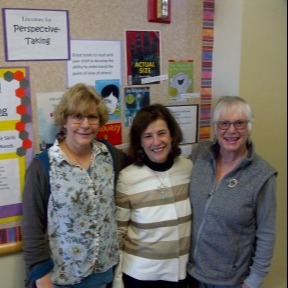
Photo: Vicki Rockholt, a counselor at Jefferson Elementary School, Ellen Galinsky and Darlene Clemens take a break in front of the Mind in the Making bulletin board. Children actively select skills to promote in themselves. (Photograph by Michael Clemens)

Reprinted from Early Learning Nation

Fred Rogers: Seeker of Truth

Fred Rogers: Seeker of Truth

In October 2003—a mere eight months after my friend and colleague Fred Rogers died—Hyperion published a beautiful book of his wisdom titled The World According to Mister Rogers: Important Things to Remember. Fred’s wife, Joanne gave me a copy a few months later.

I pulled out this well-worn, well-loved book as I prepared to write this remembrance of Fred. It’s been more than 16 years since he left us, but I haven’t wanted to write anything personal about him until now—now that someone else: Tom Hanks—will play Fred in a movie to be released this month. I already have a sense from the trailer that Tom Hanks will be incredible, but I want to try to capture Fred as Fred before I see the film.

Just looking at a title of the book, I am struck with an anomaly. “The World According to Mister Rogers” sounds as if Fred were pontificating. Yet, on every page, in every quote, there is a different story. Fred was a seeker of truth and it’s because of this impassioned seeking that we, or at least I, continue to turn to him. Like this quote: Discovering the truth about ourselves is a lifetime’s work, but it’s worth the effort.

Joanne called her life with Fred a journey. In the foreword to this book, she wrote: “The outside world may have thought that his qualities of wisdom and strength came naturally to him, but those close to him knew that he was constantly striving to be the best that he could be.”

Fred Rogers: A Seeker of Understanding

This certainly was my first impression of Fred. I met him when he came to Bank Street College. During his visit, he wanted to see The Family Center that I had helped to found; then he wanted to hear about its creation and to meet my baby Lara. He sat on the floor when I held her and he wanted to know everything—truly everything—about her.

And that was typical. Joanne says that when Fred was stopped by people in public, he ended up asking them more questions about themselves than he answered.

A few years later—in 1979—I was told that I was being considered to appear on a new television series, “Mister Rogers Talks to Parents” that Fred’s company, Family Communications, was creating. (Mister Rogers Talks With Parents is also the title of a Fred Rogers’ book.) My colleagues at Bank Street had recommended me because I was working on a book on parental development (The Six Stages of Parenthood). I was told to expect a call from Dr. Margaret McFarland.

Margaret McFarland had become Fred’s most important child development teacher in his graduate studies at the University of Pittsburgh and their powerful relationship continued. She worked with him on the scripts for Mister Rogers Neighborhood as well as on his quest to understand himself, children and their development, and others.

I have never—and probably will never—have a call like the one I had with her. My memory is that it lasted three hours. My memory is that I was grilled—literally but kindly grilled—about every possible subject: my family growing up, my experiences with my own children, and my opinions about child development issues, from the typical to the most controversial subjects. There was no way anyone could have had prepared answers to her deeply insightful questions. She wanted to understand who I really was and how I responded under intense pressure. She, like Fred, was on a quest to understand.

Wonderfully for me, I was selected! I knew from the moment I got the call that this experience would change my life in wonderful ways.

It became a standing joke among Fred’s team on the first show—which included a live audience asking questions—that he would turn to me after a question and ask: “Ellen, what do you think?” I had to become quickly adept at turning back to him: “Fred, what do YOU think?

His answers reflected an uncanny and deep understanding of children and parents. I remember one mother saying that her child had become afraid of vacuum cleaners and Fred began to probe this child’s relationship with his father, which turned out to be a significant issue.

Fred wrote: “It came to me ever so slowly that the best way to know the truth was to begin trusting what my inner truth was…and trying to share it—not right away—only after I had worked hard at trying to understand it.”

Fred Rogers: A Seeker of Compassion

Fred was always striving to understand feelings—he thought of himself as an emotional archeologist. He wrote: “Confronting our feelings and giving them appropriate expression always takes strength, not weakness.”

He wrote of the strength it takes to acknowledge and curb anger, channeling it appropriately. He wrote of the strength it takes to face sadness and let it flow into tears. “It takes strength to talk about our feelings and to reach out for help and comfort when we need it.” He added, “There is no “should” or “should not” when it comes to having feelings…When we can believe that, we may find it easier to make constructive choices about what to do with those feelings.”

Fred wrote of growing up in an era when expressing emotion, especially for boys, was taboo—though it still remains somewhat taboo. He also wrote about seeing his father cry when his beloved grandfather died and how Fred cried when his own father died, suspecting that his father would approve.

He always strove for compassion in acknowledging emotions. When Joanne would become angry at someone, Fred would pause and remark, “I wonder what is going on in that person’s day.”

Listening is where love begins.

I sometimes would stop in Pittsburgh to see Fred and Bill Isler, the President of Family Communications, and others on my way back and forth to visit my mother in West Virginia. One conversation during a Pittsburgh stop is indelible. At the time, Saturday Night Live was making fun of Fred. He asked me to watch a clip with him and then turned to me, asking, “Why would they do this?” It was before the time when making fun of others was an unfortunate everyday all-the-time media occurrence. Fred was hurt, but he strove to understand what prompted others to be cruel so he could turn his feelings from pain to compassion. Subsequently, Fred and Eddie Murphy (who was playing Mister Robinson on Saturday Night Live) met at the NBC studios and Fred came to understand that these skits were meant to be funny, not mean.

When a child was freaking out in a public place, Fred always advised bystanders not to be bystanders—not to condemn the parent or to turn away, but to offer “one kind word.” What a different experience parenting would be if we all followed Fred’s example.

If you have ever watched his testimony to a hostile Congress, you’ll see that it was in his full access to the emotional lives of children that he found power. As Senator Pastore said at the end of this testimony, “looks like you just earned 20 million dollars (for public television).” This clip was played at his funeral.

Fred Rogers: A Seeker of Acceptance

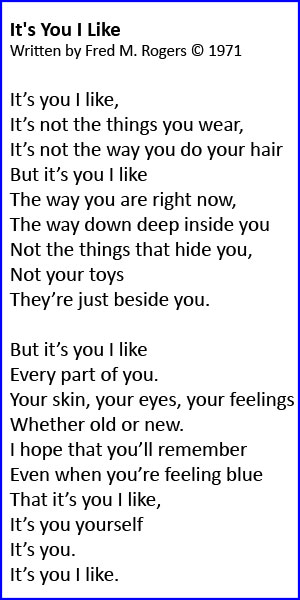
Ultimately, what Fred strove for was to have everyone accepted for being themselves. “You Are Special” was the title of his book. Once I think of his song, “It’s You I Like,” I can’t stop singing it to myself.

Fred wrote: “If the day ever came when we were able to accept ourselves and our children exactly as we and they are, then, I believe, we would have come very close to an ultimate understanding of what ‘good’ parenting means.”

What profound words!! Fred also wrote: “Love isn’t a state of perfect caring. It is an active noun, like struggle. To love someone is to strive to accept that person exactly the way he or she is, right here and now.”

That doesn’t mean we shouldn’t work to become better and to do better. That was axiomatic to him. But he felt we would do so more effectively, if we feel loved and accepted. This is the essence of what I have come to call asset-informed.

I believe that it is BECAUSE Fred was such an impassioned seeker of truth that he made such an impression in his lifetime and beyond.

During the time of the Saturday Night Live spoofs, Fred came to see me in my office in New York. At the time, we had a group of teenagers interning with us. These young people had struggled with serious adversity in their lives and were interning as part of a path toward healing. I had no idea how they would react to Fred since they knew more from the jokes about him on TV than from knowing him on his TV show for children. In fact, I worried. But was I wrong. When he walked in, you would have thought that the most popular rock star of the moment had entered our office. This group of seemingly tough young people flocked to him. They were awe-struck and opened up to him. He did not disappoint, then or now.

New generations continue to be raised with Fred Rogers, thanks to Daniel Tiger’s Neighborhood. My grandson would sing, “What do you do with the mad that you feel,” when he got upset as a two-year-old. The documentary about him won multiple awards, and I suspect the new film will be a big hit. We all want his type of kindness in our lives.

As for me, I knew the day I got the phone call to appear in his show that my life would change in many wonderful ways and it has. He and his team became dear friends. After his retirement, I was honored to have been asked to work with him to help plan his legacy at the Fred Rogers Center at Saint Vincent College. And I was asked to give a speech for him when he was diagnosed with stomach cancer—in case he hadn’t recovered enough to make it. Tragically, he didn’t make it and I had to give that speech. But traveling back from the speech with his team—all of us grief stricken and telling stories about the laughs we had shared with Fred, I was struck with how few leaders are loved that much from close-up, as well as from afar.

Fred Rogers has enriched our lives—those knew him in person and those who know him through his words, his songs, and his shows.

In seeking, Fred continued to find his truth. Through his seeking, generations-to-come will find Fred Rogers.

MORE:

Film Trailer: “A Beautiful Day in the Neighborhood”

Video: “It’s You I Like,” PBS

Website: Fred Rogers Center at Saint Vincent College

Website: Fred Rogers Productions

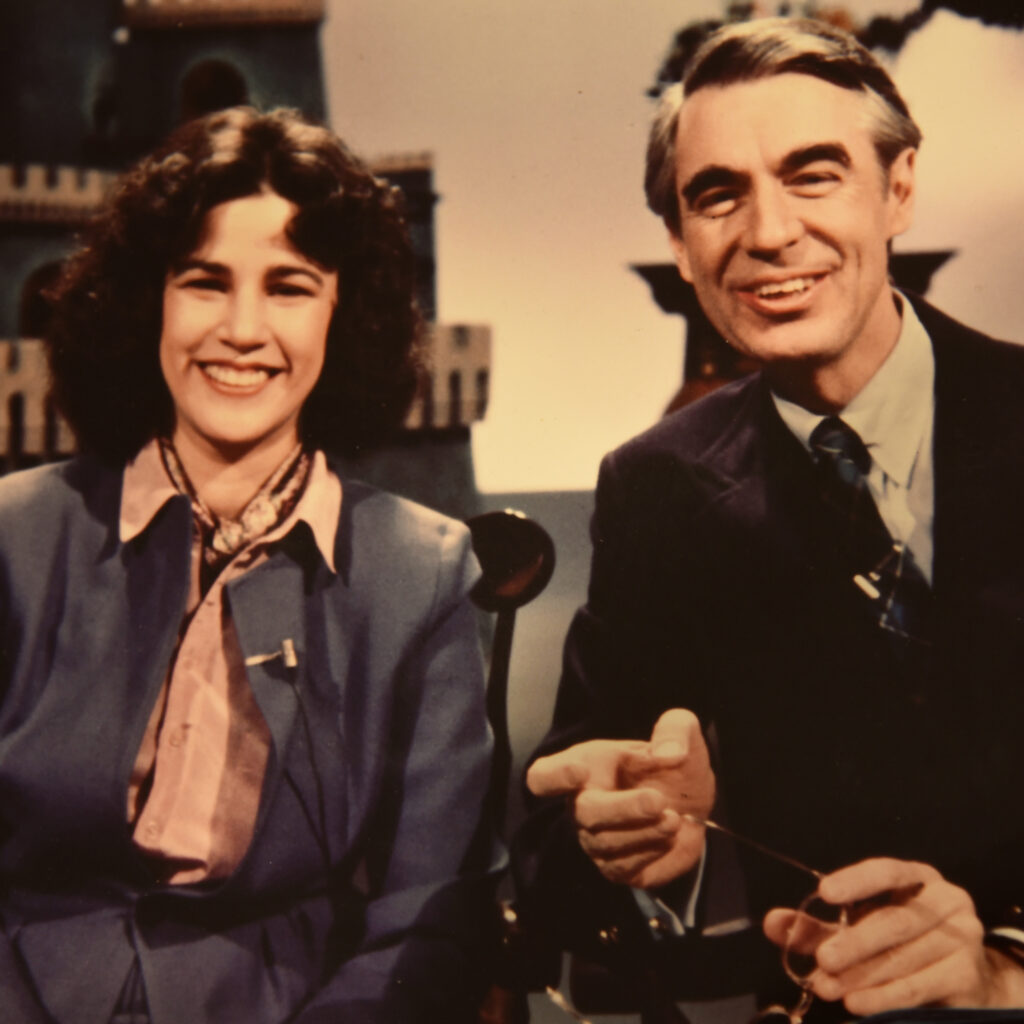
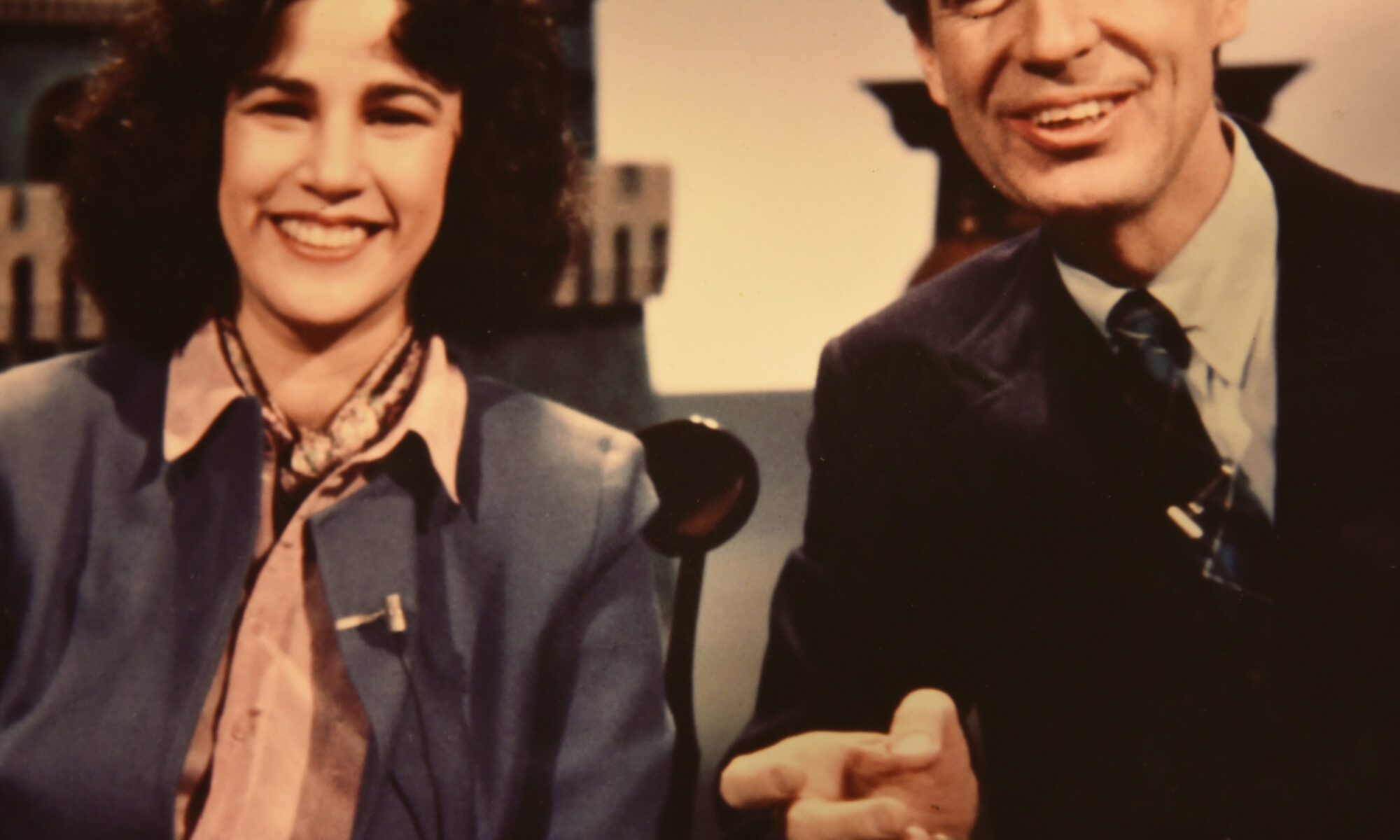
PHOTO CREDIT, FEATURED IMAGE: Ellen Galinsky and Fred Rogers circa 1980. Photo by Fred Rogers Productions

Reprinted with permission from Early Learning Nation
Why Don’t We Just Do That?

Why Don’t We Just Do That?

Three years ago, Amanda and John Horne, owners of Anna Maria Oyster Bar in Bradenton, Florida, heard that 51 percent of children in their local Manatee County school system couldn’t read at grade level by third grade. They were appalled.

“This was horrific,” Amanda says. “We had no idea that this was an issue.” Over cocktails one night, Amanda and John wondered what they could do. Their clientele is largely composed of older “grandparent-type” people. They have four restaurants and a mailing list of more than 24,000 customers. What if they could pair children up with a grandparent figure or somebody who cares about them, read with them and maybe instill them with a love of reading?

They have four restaurants and a mailing list of more than 24,000 customers. What if they could pair children up with a grandparent figure or somebody who cares about them, read with them and maybe instill them with a love of reading?

“And as the cocktails carried on, it was like, ‘Why don’t we just do that?’” she says with a laugh. Thus, in 2017, Dive Into Reading launched in partnership with the School District of Manatee County, the library system and the Suncoast Campaign for Grade-Level Reading.

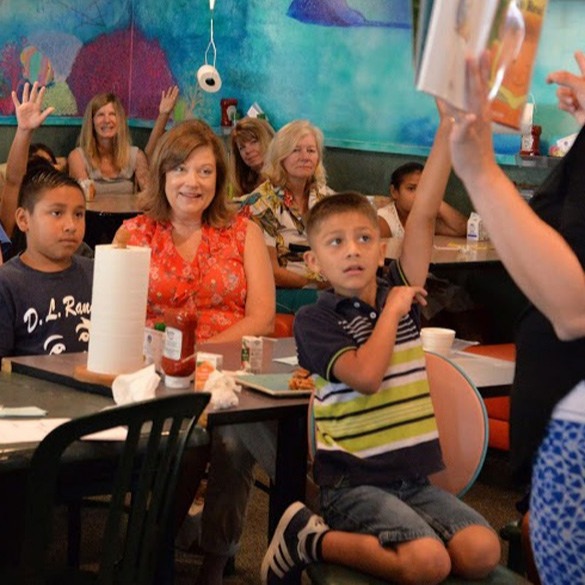
The Hornes designed the program with a simple premise: bring the children and mentors in for a hot breakfast and get them reading. Many of the children have not been exposed to basic life skills, so along with reading, they learn table manners, how to order from a menu or how to select items from a buffet.

“They come to us once a week for the four weeks of summer school and we do our best to pair them up with the same mentor every week. We want the mentors to know that it matters to the kids that an adult is actually spending two solid hours with them one-on-one.”

Amanda attended the Mind in the Making workshops offered by the SCGLR and loved learning how children’s brains work. She and John now require each mentor to attend a 1.5-hour training for which The Patterson Foundation provided two Mind in the Making trainers. The mentors have said the training makes them more comfortable with the children and confident that their interactions can actually help the children grow stronger in their ability to think and the life skills that will help them be successful.

The Hornes give each child in their program a special T-shirt that entitles them to come into any of their restaurants at any point during the next year and have a free meal. They also provide the children with gift certificates so they can bring a caregiver with them and show off what they’ve been learning. Partnering with the Early Learning Coalition of Manatee County, each of the Hornes’ restaurants now provides a book nook where the kids can read during dinner and then take a book home with them. And in partnership with other community organizations, at the end of the four-week session, each child receives a backpack filled with school supplies.

Amanda is proud of their accomplishment, which earned their restaurants the 2019 National Restaurant Association Education Foundation’s Restaurant Neighbor Award. However, in creating the program, they both have learned how much remains to be done. Many of the children face persistent hunger, for instance, and that’s not all right with the two restaurateurs. And then there are those six weeks between the end of their summer program and the beginning of school.

“What are they doing for those six weeks? I bet they aren’t reading,” she says. “We want them to be reading.”

The kids were proud and excited to receive their bracelets as rewards for reading, courtesy of the Suncoast Campaign for Grade-Level Reading “Dive Into Reading” Milestones

  • Launched in 2017 with 76 children and 54 mentors in Manatee County. After the first summer’s program, the school district tested the children and found they had gained 1.25 months of reading skill over the summer.
  • Expanded by June 2019 to all four Anna Maria Oyster Bar locations, The Bishop Museum of Science & Nature and has now expanded to Sarasota County, thanks to a partnership with Gecko’s Grill & Pub and the Sarasota County School District.
  • Communities now comprise 11 schools, seven teacher coordinators and 354 mentors who served a total of 3,487 hours to help 365 students read a total of 13,730 books.
  • Partnerships/Collaboration: The program has had support from the Kiwanis, Chamber of Commerce, school district and numerous philanthropic and service organization

RESOURCES:

Mobilizing Communities So All Children Make the Grade Pop Up Neighbor events, community, collaboration, mobilization

“Community Cultivators” Shared Values, Different Stories: Logan Smalley’s Vision for Building Community

Meeting (and Teaching) Families in Unexpected Places Grocery stores, bus stops, laundromats… what’s next?

Let’s Create An Early Learning Community Wait, What’s an Early Learning Community?

Reprinted with permission from Early Learning Nation.

Mind in the Making: 10 Years of Keeping the Fire Burning in Children’s Eyes

Mind in the Making: 10 Years of Keeping the Fire Burning in Children’s Eyes

Not all adventurers wear rugged clothes and pith helmets; some carry laptops, notebooks and pens. But all are driven by the same impulse: They have a question and they won’t rest until they have an answer that satisfies them. “What’s over that mountain?” “Where does this river go?”

In the case for Ellen Galinsky, author of more than 100 books and reports and a self-described “research adventurer,” the driving question in 2000 was, “How do we keep the fire burning in children’s eyes?”

Some people like their adventure exploring uncharted territory, Galinsky says, but for her, research into critical societal questions is the call of the wild. Twenty years ago, she was doing field research in preparation for a study on youth and learning when she discovered that while kids from the sixth through 12th grade could talk at length about “not learning,” few could talk with much passion or insight about times when they were learning.

“I interviewed incredible groups of children representing all kinds of diversity,” Galinsky says. “Children from low-income, high-income and middle-income families, from public and private schools, charter schools, living in inner cities, suburbs, rural areas. Across the board, few of them had a real excitement about learning. There weren’t really engaged in learning.”

Knowing that babies are born learning—wanting to see, to taste, to touch, to explore their worlds—Galinsky was haunted by the question, “What happened to that fire?”

For 10 years, she and her colleagues, including award-winning filmmakers from New Screen Concepts, pursued that inquiry by interviewing and filming leading child development researchers. After a few years, she began to see common threads not only in what sapped children’s engagement in learning, but also in the elements that fostered it. These findings were called by different names in different fields, but Galinsky’s training as a researcher and passion for conducting studies led her to recognize unmistakable patterns.

Out of her analysis of the work of nearly 100 researchers, she saw the importance of the “how of learning”—how a certain set of brain functions help people thrive and learn. The even better news she observed is that these brain functions (called executive functions) involve skills that can be developed and nurtured.

In 2010, this inquiry became a pioneering book—”Mind in the Making: The Seven Essential Life Skills Every Child Needs”—that has become a staple for teachers, parents, pediatricians and anyone with a personal interest in early childhood. As Drs. Spock and T. Berry Brazelton were to previous generations, Galinsky’s “Mind in the Making” is a seminal resource for those wanting to see children do well in the world.

The engine of “Mind in the Making’s” success is not only its rock-solid research, but its conversational, relatable language, filled with storytelling, individual examples and questions designed to provoke thought and discussion. Galinsky’s foundation as a teacher and educator (25 years on the faculty of the prestigious Bank Street College of Education before co-founding Families and Work Institute) shows in her personable, playful approach to the information, written in a way that doesn’t guilt-trip families and professionals but leads them into a thoughtful consideration of the ideas she’s presenting.

While Galinsky might have paused to take a deep, relieved breath once she had finished writing the book, she knew this was the starting point, not the finish line.

“Even after the decade of research, it takes nine months to birth a book,” she says. “After I got through the nitty gritty part of writing and with my colleagues, checking, double-checking and triple-checking the footnotes and quotes, I sent the manuscript out to 20 to 30 people I really admired. I was terrified, totally terrified, because I had taken their research and woven it into a larger theory and I worried that they might not like it. But I also wanted to figure out with them and others how we could turn this theory and the research behind it into action.”

To her great relief, the responses were “incredibly positive.” From that starting point, “Mind in the Making” became as much a movement as a book.

“I didn’t want this to be a book that just sat on the shelf,” Galinsky says. “I wanted the knowledge to be useful and usable for people. I wanted to put forth a common language that people could use to understand behavior in systematic ways. And I wanted this to be knowledge people could act on.”

Take a Deep Dive into MITM!

“As soon as the book was published, my colleagues and I were doing 100 things with ‘Mind in the Making,’” she says. “At Families and Work Institute (the non-profit she co-founded in 1989), we raised funds from 23 foundations to create materials—a series of videos called Experiments in Children’s Learning, Book Tips in partnership with First Book and Skill Building Opportunities—tip sheets on turning discipline issues into opportunities to promote life skills. With funds from the Kellogg Foundation and others, we developed learning modules for community leaders and then with additional funding, adapted them for museum and library educators and for healthcare professionals. We also gave small grants to people in communities all over the country who were already using Mind in the Making for projects to expand their impact.”

In 2016, Mind in the Making became a program of the Bezos Family Foundation to share the science of children’s learning even further through in-depth training and action-oriented materials. At the Foundation, where Galinsky served as Chief Science Officer, the Mind in the Making team—including Erin Ramsey, Jennie Portnof, Marline Griffith and Brandon Almy—continued to create new materials. Importantly, they created online Modules with Cultivate Learning at the University of Washington.

Galinsky says the dog-eared, scribbled on copies of her book, filled with Post-Its and marginalia make her happy. “It feels as if the reader and I have had a conversation. She continues, “When you write a book, it’s a very solitary activity. It doesn’t take a quarantine to quarantine anyone who’s writing a book. So, seeing the way people are actually using the book is gratifying. And the fact that we’ve reached the 10th anniversary is simply incredible to me.”

Significant Impact: Getting the Science off the Shelf and Into the Hands of Users

One of the first big impacts of the book was that the National Association for the Education of Young Children obtained the rights to publish 25,000 copies of “Mind in the Making” for teachers. A second big impact was a partnership with the Institute for Educational Leadership in implementing training and sharing materials with community schools in six different parts of the country.

“Teachers and principals don’t necessarily learn child development information,” she says. “They learn a lot about pedagogy (the principles and methods of instruction), but they learn less about child development. And they want that—they want to know why children act and develop the way they do. So, we found this huge resonance for ‘Mind in the Making’ in schools.”

“There are wonderful repercussions of our work with community schools,” she says. One repercussion was meeting Erin Ramsey who had been overseeing the Mind in the Making work in Evansville, IN. Ramsey joined the Mind in the Making team in 2012. “Erin is one of the most talented trainers and materials-creators I have ever met,“ says Galinsky.

Ready to Learn Providence

Another repercussion was a U.S. Department of Education’s Investing in Innovation grant to Ready to Learn Providence that expanded their community school work. Through this grant, Ready to Learn brought Mind in the Making, (which they describe as “a powerful learning experience for adults about how young children develop executive function skills”) to all 22 elementary schools in Providence, training close to 2000 mothers, fathers, grandparents and other family members, and more than 400 professionals.

“Mind in the Making was a transformative experience for so many members of the Providence school community,” says Leslie Gell, Director of Ready to Learn Providence. “Over our four-year project, external evaluators found that families reported significantly less authoritarian views toward parenting, which research shows leads to higher executive function skills in children. They also found that parents reported more positive views about the importance of their involvement in the schools, expressed more confidence in their ability to help and support their children in school, and reported growth in the social, emotional and cognitive development of their children.”

Mount Sinai Parenting Center

In 2019, the Mount Sinai Parenting Center in NYC, in collaboration with the Mind in the Making team, released Keystones of Development Curriculum, a curriculum they had worked on together for a number of years. This online curriculum for pediatric residents shows how to promote brain development and strengthen parent-child relationships within routine well-child visits. Dr. Carrie Quinn, Executive Director of the Mount Sinai Parenting Center, just announced that 101 programs, 2800 residents, 641 faculty members and 298 champions are now enrolled—reaching almost half of all of the pediatric residency programs in the United States!

National Head Start Association

The Mind in the Making and Vroom teams at the Bezos Family Foundation are especially proud of their collaboration with the National Head Start Start Association. “We have a dream of creating a Mind in the Making Nation,” says Yasmina Vinci, executive director of the National Head Start Association. “In Head Start’s 55th year of getting children ready for school and life, we will accelerate and scale the awareness and impact of strategies for promoting executive functioning among Head Start’s more than 270,000 staff members across 1,600 grantees in communities across the country.”

Ellen Galinsky discusses how a focus on “trauma informed care” in early learning is shifting to “asset informed care.” And that process starts with looking at children in terms of their strengths.

In looking at her own growth over her years of researching and writing “Mind in the Making,” Galinsky says delving into the research itself was full of surprises and questions leading to more questions. She was especially captivated by the fact that babies’ brains appear to be wired to help them to learn about the world in specific ways, and that this learning begins long before babies can be taught this kind of knowledge.

In “Mind in the Making,” Galinsky wrote, “babies’ capacities are truly amazing, but even more amazing is that we now know how to take advantage of these capacities to help babies and their older siblings develop the essential life skills to serve them throughout their lives.” And that’s what Galinsky and the Mind in the Making team are so proudly doing, day in and day out at the Bezos Family Foundation.

Even as Mind in the Making celebrates its 10th anniversary and continues to expand society’s knowledge base about young children’s behavior and development, more questions have introduced themselves to Galinsky’s inquiring mind.

“I’m continuing to pursue questions related to ‘Mind in the Making,’” she says. “But my big adventure now has been looking at adolescent development, including conducting several studies of adolescents and their parents. In addition, through the Bezos Family Foundation, I’ve gone out with filmmakers Lisa Rinehart and Jennifer Hamblett and filmed more than 35 leading researchers on adolescents’ development around the world.”

Galinsky is currently writing a book about adolescence and hopes to create all kinds of resources, including materials to help adolescents understand their own development. She says, “I feel that I am unlocking new knowledge of how to help adolescents and the adults in their lives thrive.“

A worthy pursuit for Ellen Galinsky, adventure researcher—and the adolescents, parents, educators and others whose lives will be altered by this handiwork.

MITM: Creating Cultural Ripples of Early Learning + Brain Building

Researcher and author Ellen Galinsky likens the aftereffects of publishing a book to the ripples created by tossing a rock in a still lake. The size of the rock determines how far the ripples will reach. In the case of her “Mind in the Making: The Seven Essential Life Skills Every Child Needs,” it was mighty big rock.

  • Since Mind in the Making launched in 2010, more than 100,000 people in communities across the U.S. have participated in its training and learning modules. A survey of 1,750 respondents who attended the trainings revealed that 98 percent reported that the experience helped them improve their skills with children and learn new approaches and knowledge.
  • The MITM team has reviewed more than 2,000 studies and interviewed and filmed more than 160 leading researchers, incorporating their work in MITM training and tools
  • MITM has offered more than 300 presentations to national, state and community groups interested in education, workforce development, parenting and brain science; a half-million+ readers have downloaded MITM’s more than 100 free resources that help bridge the gap between knowledge and practice.
  • Vroom is a global program of the Bezos Family Foundation that offers free, science-based tips and tools to help caregivers and parents give children a great start in life. Communities, organizations, brands and media have worked together to reach parents where they are: community-based health clinics, refugee camps, children’s museums and other essential settings. These free tools that the Mind in the Making team helped create are offered in English and Spanish, and show how little changes can make a big impact on growing brains.
  • To see how MITM has been at the center of magical mind-building events and programs, see Early Learning Nation’s extensive examples.

Ellen Galinsky discusses how a focus on “trauma informed care” in early learning is shifting to “asset informed care.” And that process starts with looking at children in terms of their strengths.

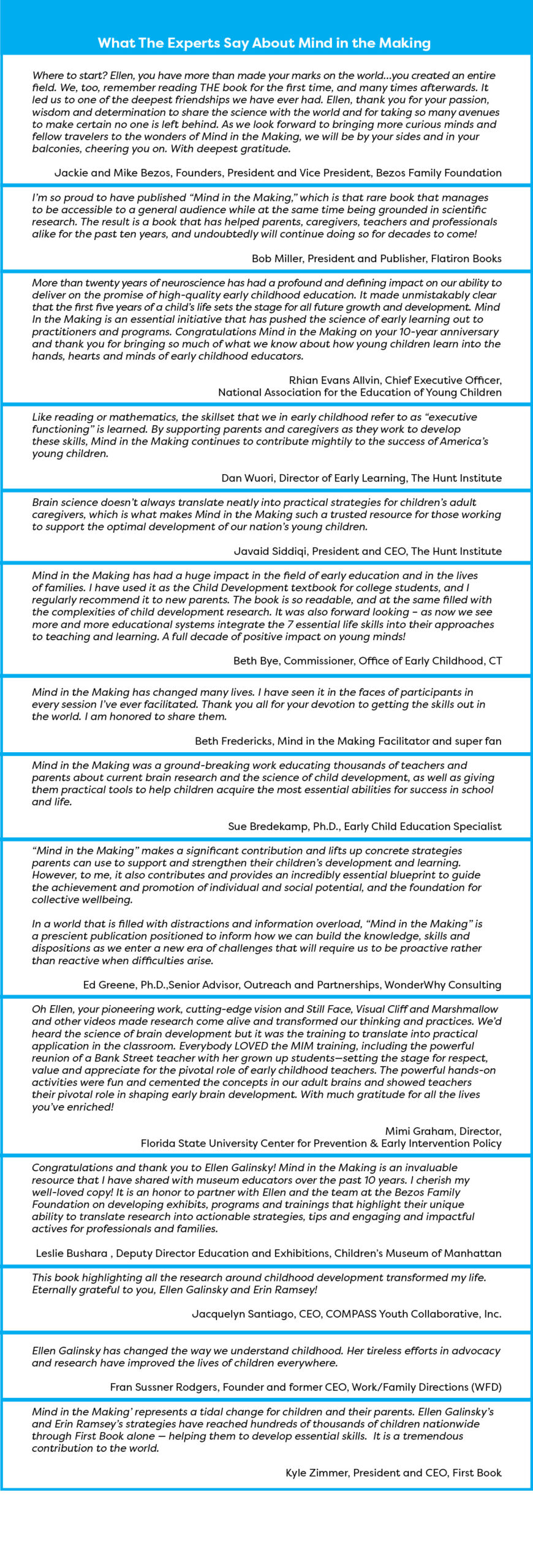
What The Experts Say About Mind in the Making

Reprinted from Early Learning Nation
Child Care vs. School/Education vs. Care

Child Care vs. School/Education vs. Care

The divide between how school is currently seen (as education) and child care is seen (as caring at best and as warehousing at worst) is not only infuriating, it is just plain wrong. What’s worse, it could take us back 40 years.

This backwards turn ignores the decades of research revealing that the early years are foundational to learning. It also ignores the decades of research revealing that children need both education and care when they are infants, toddlers and preschoolers, and when they are school-aged and older.

This is not a semantic argument. It is creating draconian decisions policy makers, educators, and families have to make. For families, it’s trying to stay safe, having your children learn and earn a living when in-person child care may be open but in-person school is not and you have different children in different places on different days of the week and your job is lost or in jeopardy. For teachers, it is trying to stay safe, trying to teach when children may not have connectivity or learn well online and your own child’s care is a house of cards. For programs and policy makers, it is trying to stay open or being forced to close because there isn’t enough money. And for everyone, it is ongoing uncertainty and fear.

Thank you, Elliot Haspel—author of Crawling Behind: America’s Childcare Crisis and How to Fix It—for your eloquence and perfect timing for this OpEd. He highlights “the duality of the conversations around child cares programs and public schools and the perceived gap between what “care” and “education” mean. That gap has set the two sectors on different paths of funding, governance and professional power.” in “Why Are Child Cares Open When Schools Are Not?” and the even more explicit lead-in “Society’s perception of child care being of lesser quality to education has rarely been so pronounced” for The New York Times.

If ever there was a time to try to heal schisms, this is it!

Mind in the Making: Transforming Communities with Science and Heart

Mind in the Making: Transforming Communities with Science and Heart

For seven years, I’ve shared the brain science of Mind in the Making (MITM) with people from all walks of life. Thus far, approximately 100,000 educators, community leaders, families and professionals from education, libraries, medical facilities, museums, nonprofits, law enforcement, mental health, churches, prisons and more have participated in the MITM Learning Modules.

These Learning Modules lead with science, combining deep research focused on executive function skills, with signature science-fueled learning. The training provides opportunities for adults to examine themselves, the research and the actions they can take to promote effective learning in themselves and in children. The training is based on the book, Mind in the Making: Seven Essential Life Skills that help adults understand and encourage the critical executive function-based skills children need to thrive.

No matter how many groups I work with—regardless of the varied reasons they begin the journey—it’s been so gratifying to see the connections forged among individuals and communities who attend the trainings.

Why is this so gratifying? Because it’s rare to create a platform and an experience where people with high levels of education and people with very little education learn from each other, where different cultures and ethnicities come together and feel empowered by each other, and where various professions and points of influence in children’s lives converge on commonalities rather than on our differences.

MITM provides a rare instance where individuals take the time to reflect about their own Life Skills and how they want to move forward while applying the science in their own lives.

Our process engages families, communities and sectors in new ways, in a true cross-sector collaboration. This is community building and as a bonus, we level the playing field and give states and communities ways to join forces and accomplish change together.

Also inspiring: the decisions people make, the goals they set and the perspectives they gain. Some of my favorites include when the connection between the science and Life Skills help people set goals that put the research into daily practice. Self-directed, real-life application becomes a game changer. For example, this happens when a co-worker decides to work on Focus and Self Control by practicing being a better listener instead of trying to fix something or interject ideas. Or when a parent or caretaker decides to ask more questions to improve Perspective Taking skills. Or when the teacher steps back and reflects upon the relationships with families in a new light that leads to improved Communicating skills.

Another favorite part of the learning journey for me is witnessing the paradigm shift among participants who learn that we can only set goals for ourselves, not for children or other adults. It is powerful when adults put the actions and desired outcomes on themselves. For instance, instead of a teacher asking young children to sit and listen to develop Focus and Self Control, the teacher sets a goal grounded in research: play more skill games and teach strategies to promote Focus and Self Control. Children benefit when we begin with adults.

I particularly love how the Life Skills empower people to look at themselves and at children with a genuine and effective strength-based lens. The Life Skills and strategies to promote the Life Skills provide space for participants to remember that if they are struggling, they are not innately flawed or “at fault” or “bad parents.” These skills can be developed with strategies and practice, and MITM provides the science, strategies and practice.

Keeping the love of learning alive for adults and children—the mission at the heart of Mind in the Making—is what keeps me passionate about this work. It boils down to our humanness while building on a solid foundation of effective teaching and learning, science, child development and goal setting. We connect the science and the communities so people can keep or reignite their love of learning to help children do the same.

Mind in the Making and all the people I have worked with have been gifts beyond description. Bringing the science and heart together is a winning combination that transforms lives.

Interested in Mind In The Making Training?

Find out more!

Your support will allow us to continue to deliver our high-quality research, publications, and services to you. Families and Work Institute is registered as a 503(c)(3) non profit organization
EIN 13-3560042.

To provide a Corporate Gift or have Donation questions – Please email donate@familiesandwork.org