Parenting from Prison, Preparing for Coming Home

Parenting from Prison, Preparing for Coming Home

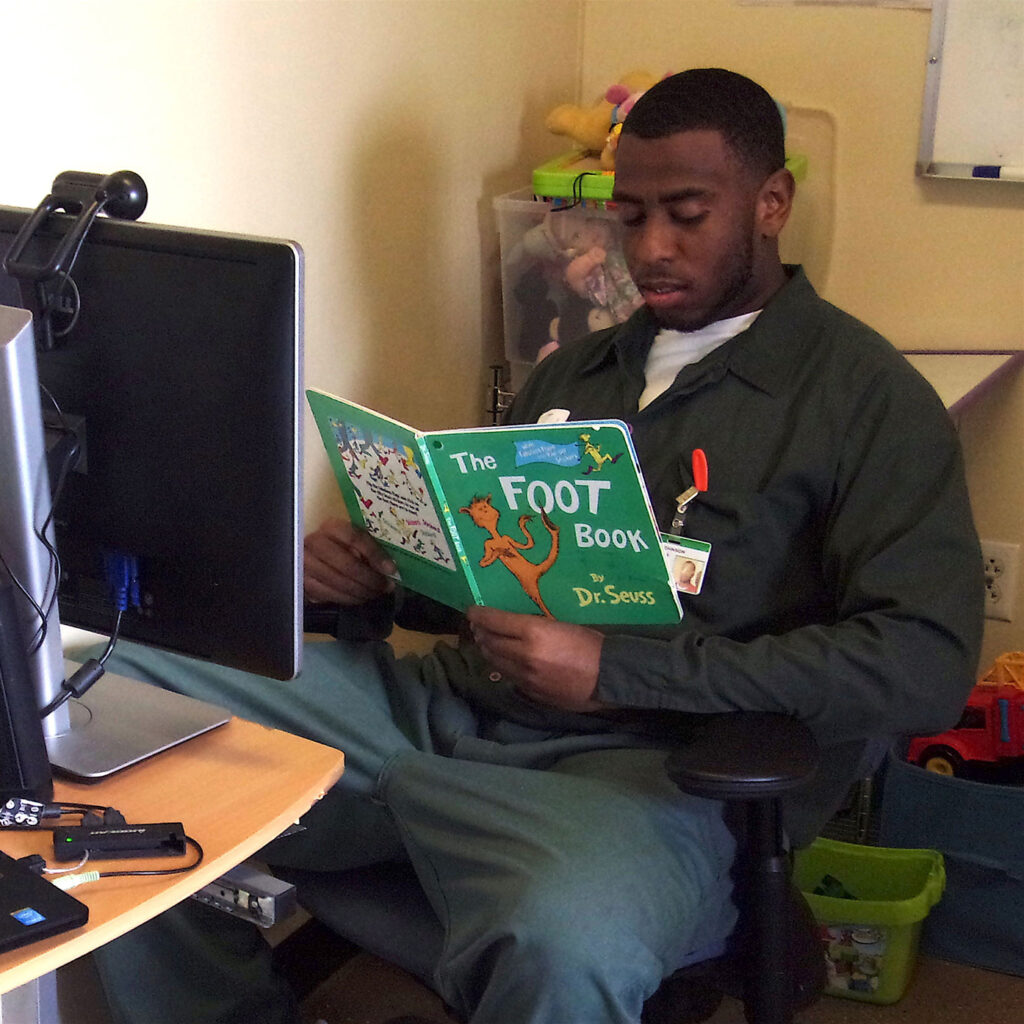
E—- Johnson, 29, is a sheet metal worker. “It’s a good job because of the union,” he says. He hopes to return to this job as soon as he leaves prison, perhaps as early as next summer, but what he’s most looking forward to is reuniting with his girlfriend and their three children: a 12-year-old daughter, a 6-year-old daughter and a 4-year-old son. To prepare for that moment, Johnson is dedicating time and effort to the parenting education provided by the Family Connections Center, an innovative program run by the New Hampshire Department of Corrections.

Johnson’s daughters and son are three of the 2.7 million children (1 in 28) who currently have a parent behind bars, according to the Pew Trusts.

The Family Connections Center teaches parenting skills and addresses general child development. The program is geared to address the unique struggles of families with an incarcerated parent. Participation earns Johnson an “earned time credit”: reduction of time served as well as extra opportunities to engage with his children and to take more classes, but he doesn’t just do it for the perks.

“My childhood wasn’t the best,” he says. “My parents were addicted to drugs. They weren’t always around. These courses make me think about myself when I was the age my children are.” Johnson grew up in Springfield, MA, often in the care of his grandmother, who had seven children of her own.

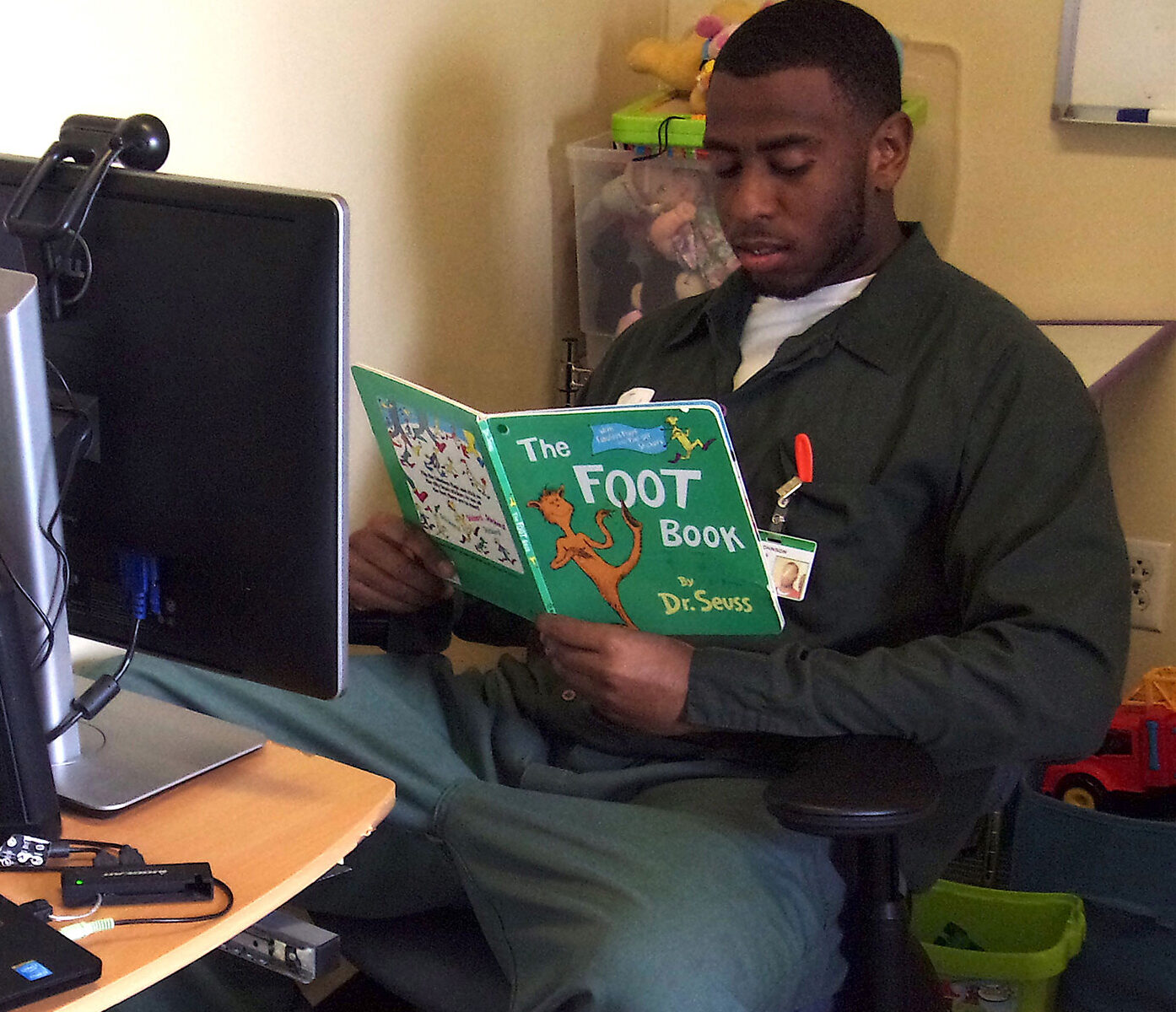
Because he has three children in the same household, he is allowed to string his three 20-minute video visits together to make a full hour, twice a month. During these visits, they do arts and crafts projects, and he reads books aloud (sometimes using hand puppets). “The books give us something to talk about,” he says. “We discuss our favorite authors and characters.”

Program supervisor Tiffani Arsenault teaches the classes. “She breaks it down scientifically,” says Johnson. “What’s happening inside their minds during infancy, through the toddler years and on up through adolescence.”

In a facility that holds 600-700, Arsenault works with 80-100 fathers, who voluntarily attend weekly programs. In addition to the parenting course, Johnson is taking a sequence of classes built around the videos and handouts from the Mind in the Making curriculum based on the book by the same name by Ellen Galinsky, which posits self-reflection as a pillar of improved parenting. “How are you supposed to instill focus and self-control in your kids if you never developed those skills yourself?” asks Arsenault. “I love Mind in the Making because it gives them that foundation they need.”

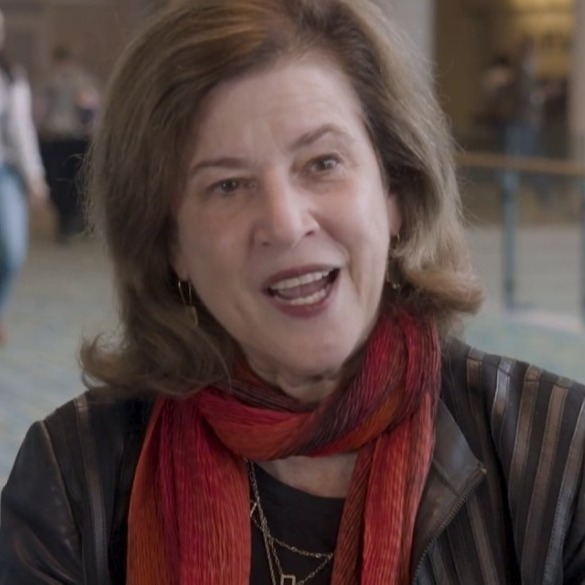
“The unique aspect of this program is that it promotes skills in adults and children,” says Galinsky. “It makes brain development science accessible for all ages and it’s encouraging to hear that New Hampshire views prison as more than punishment. It can simultaneously be a learning community for parents and their children.”

Arsenault says she’s had to grow into the role of conducting training for parents. “When I started, I wasn’t a mom yet,” she says, “and I never put much thought about who goes to prison or how many families are affected by incarceration.” After nine years on the job, having the opportunity to hear their stories and get to know some of their families, she says “They’re all just doing the best they can, like the rest of us.… The families affected by incarceration are our families, friends, neighbors, community members and so on. We all experience hardships.”

Watch an in-depth report on Family Connections Center

She describes the Family Connections Center as “an opportunity for self-betterment. “They’ve had a lot of adverse experiences. They’ve burnt a lot of bridges. But they’re learning the value of consistency. And they’re trying to be better dads.”

Since 1998, the program has offered support and education for approximately 6,700 kids of incarcerated parents; this number is probably low because of the way in which data have been collected and maintained. It operates at all three of the department’s prisons. In addition to the course work, the Family Connections Center provides opportunities for the children to visit their parents via video and for family fun days, which are a field day of sorts, including a barbeque and games. There’s even a summer camp—YMCA’s Camp Spaulding—that allows kids to spend two full days in the prison with their incarcerated parent. It’s inspired by Hope House DC.

The approach is backed by research. According to a 2005 study in the Journal of Contemporary Criminal Justice, “There is evidence that maintaining contact with one’s incarcerated parent improves a child’s emotional response to the incarceration and supports parent-child attachment.”

According to New Hampshire Department of Corrections Commissioner Helen Hanks, ”Family Connections Center provides a critical resource to men and women who are parents and incarcerated in a multitude of ways by assisting in navigating the impacts of the incarceration on their children, advancing their parenting skills and creating access to communication through reading, video visits and other creative projects.”

Unfortunately, the New Hampshire model is still not common. A report by Bureau of Justice Statistics found that only 53 percent of incarcerated parents had spoken with their children over the telephone since admission, and just 42 percent had had a personal visit.

In a video featuring the Incarcerated Nation Campaign, Shaquille Muallimm-ak recalls his father’s prison sentence, during which time no contact was permitted, saying, “It felt like somebody died,” adding that he felt like he, too, was incarcerated.


Johnson tries to be honest with his children about how he became incarcerated. “It’s even okay with me if they talk about it in school,” he says. “I’m not the only father in jail.”

Reprinted with permission from Early Learning Nation.

 

Creating a Special Time

Creating a Special Time

A GRANDMOTHER RECREATES THE FAMILY CALENDAR FOR HER YOUNG GRANDCHILDREN

Erin is a grandmother who lives with her husband, their children and three grandchildren on a farm in the middle of the country. She is also a telecommuter who works full- time. In the beginning of the pandemic, she felt overwhelmed:

Everything was changing fast and there was so much uncertainty about how to be responsible and fully comprehend what was happening. We were worried about everything—staying safe, not getting sick, and having resources.

There are very real dangers—her husband’s work is considered “essential” so he has leave home and go out into the world to work every day. Soon it dawned on Erin that they couldn’t keep living in constant fear. It wasn’t good for them, their children, or their grandchildren. She also saw that being cocooned at home with most of her family could have some positive repercussions and, in fact, be a “once-in-a-lifetime opportunity.”

We realized we would never have a chance like this again, when we were altogether, with the kids this age for such a prolonged period of time. We focused on what we could control—like social distancing and abiding by all of the recommended safety measures. And just as importantly, we focused on how we want to function as a family—how we want the children in our family to remember this time in history.

In their kitchen, there is an erasable chalkboard calendar. Before COVID 19, they had used this calendar to manage their weekly schedules. They would write their activities on the chalkboard, one color for each adult in the family. The calendar looked as if it should have been posted in a train station to keep track of arriving and departing trains—that’s how busy it was.

Now, it’s all changed. Erin says:

We make a family plan for the week. We begin by asking the kids what they are interested in and would like to do. We select one special family activity for each day.

Every evening, we talk about the next day’s activity and what we will need to gather to do that activity.

Now that’s all we have on the calendar—just the family’s special time.

It isn’t that the activities are that special, Erin says. But they feel special to her grandchildren because the family has planned them in advance, because they have talked about them together, and because they are written down on the family calendar:

When I finish work, the girls come running up, ready for our “special time.” It gives all of us something to look forward to, day after day at home.

They have done paintings, made play dough (until they realized they should conserve flour) and drawn rainbows. They found the Rainbow Project on the Internet. They read about children in Brooklyn making rainbows that they put in their windows to express solidarity during the crisis. Children all over the country and world are now making rainbows and a rainbow map was created on the Internet. Erin says:

We looked at the map. Because we live so rural, there were no rainbows near us.

Making rainbows and then putting ourselves on the map made us feel that we were part of something bigger than ourselves.

COVID 19 has been a rocky ride for Erin. She says:

One minute I am focused on the fear and concern for others and ourselves, and the next minute, I am focused on the joy. It is an emotional rollercoaster like I have never experienced before—but like everything in life, we can choose where to put our focus.

Having these joyful moments comes with a price — “because I know that families are losing people they love: But they are necessary for our family’s health,” she says:

When things are awful, we have to give ourselves and our children times of joy. While we feel what we feel, we can also help others.

Ensuring children take an active role is one of several strategies that studies find promote executive function life skills.

Reprinted with permission from Families and Work Institute.


Giving a Child a Chance to Grieve

Giving a Child a Chance to Grieve

A MOTHER OF A 9-YEAR-OLD REALIZES WHAT LIFE WITHOUT SCHOOL-AT-SCHOOL MEANS TO HER DAUGHTER

School closed!

Elisabeth was now at home with her two children—a fourth grader and a kindergartner and working full-time.

Stress!

So, she set up a school schedule. She explains why:

I know that creating routine and predictability often mitigate stress, I jumped right to creating a “school” schedule for our family. It wasn’t overly ambitious or sophisticated, but it had times and activities and offered a structure.

To her astonishment, her fourth grader, Julia pushed back and refused to follow the schedule:

Julia strongly rebelled against it. I was so surprised! She’s the one that loves schedules and rules and lists!

Thinking that it would just take time, Elisabeth forged ahead, believing that she knew best. She pushed the schedule even more and Julia rebelled even more.

Finally, she turned to a friend, who told her:

Pretending that “the show must go on” is unbearable.

This friend reminded Elisabeth that creating school at home was downplaying the fact that Julia has suffered a loss: she had lost her school at school—being with her friends, her way of life. She was furious that her mother was ignoring this loss.

As Elisabeth thought about it, she realized:

To her, it was like a pet or loved one died, and I just tried to slip a new one in on the sly and pretend it was the same. She needs to grieve. Process.

What Elisabeth did was take her child’s view. Behavior—even if it feels willful, rude, or disrespectful—always expresses a real problem. There is a reason behind children’s challenging behavior. If we can just stop and try to understand what that reason is and address it, it won’t feel like we’re pushing against a brick wall.

With this understanding, Elisabeth took time to let Julia grieve, to talk about her loss, to express this loss in words, in pictures, and in other ways. “And then,” as her mother says, “to start anew.”

This brilliant person—my child—has much to teach, if I can find the patience to pay attention.

Taking Your Child’s View is one of several strategies that studies find promote executive function life skills in children—important skills that children and adults need to thrive.

Reprinted with permission from Families and Work Institute.


Bringing The Outside In

Bringing The Outside In

Kathy describes her granddaughter to me:

Ellie is four and three quarters—almost five. That three-quarters is very important to her!

She continues:

Ellie likes to climb; she likes to run; she likes to do gymnastics.Sadly, none of the places where you can do any of those things is open. This week, she couldn’t go outside at all. It was kind of terrible.

Kathy didn’t linger on the fact that her granddaughter was stuck inside. She turned it into a challenge, focusing instead on ways to bring outside-type activities into her house.

We HAD to figure out a way to get all of that energy out.

Kathy is not new to this—as a psychologist she has studied and created initiatives on playful learning. What’s wonderful is that her ideas can inspire our own ideas. Here’s what she did.

First, Kathy created a timed obstacle course in her house. The start line was at the top of the stairs and the finish line took Ellie back up the stairs again. The course was marked with masking tape, which Kathy cut into the shape of arrows. She then attached the arrows on the wooden floor, on the couch and the carpet. Her couch is in sections, so she pulled them apart:

Ellie would run down the stairs, following the arrows. They led her to the couch. She had to mount the first section of the couch. I made it wide enough so that it was a challenge for her to figure out how to jump from the first section to the second section.

Kathy laughed, telling the story of how Ellie figured out her maneuvers:

She decided the best way was to go stomach forward. She did an army crawl across the sections of the couch.

Kathy found an old ring game and set that up at the end of the couch so Ellie had to throw rings and try to get them to land on the pegs.

The timed obstacle course doesn’t depend on having a ring game or a sectional couch. If you want to add a throwing game, you can create your own, such as throwing something that do damage inside the house onto pieces of paper at varying distances. The obstacle course can also go anywhere—over, under and across any furniture you have.

The next game was Play That Tune, which Kathy describes:

Imagine that you are facing a table. On the table, there are three bowls of different sizes and colors. They are turned upside down.

If you don’t have different colored or safe bowls, you can improvise and use different-sized objects as drums.

On the wall, directly above the three bowls, Kathy taped a pattern of three colored strips to the wall that indicates the order of the bowls that Ellie is supposed to play. Kathy says:

So, let’s say the bowls were blue, yellow and white, which were my colors.I made strips of those colors on the wall in this pattern: blue, blue, white. Blue, blue yellow. Blue, blue white.

When Ellie saw the pattern “blue, blue, white,” she took the wooden spoon and hit the blue bowl once, hit the blue bowl twice, then hit the white bowl. Kathy continues:

It turns out that doing that fast is even hard for adults. It’s quite a challenge.

The next game was Shapes. For this game, Kathy cut out triangles, circles and squares that she taped to the floor, forming a pattern from a start to a finish line. The challenge is for Ellie to run this relay only going on triangles, only on squares or only on circles.

Ellie is getting really good at leaping from the first to the second to the third triangle. I time her and she goes again and again and again to see if she can beat her time.

The final game for Inside Time was Composer’s Corner, where they wrote a song together. Writing a song is not so easy. The words have to make sense as well as rhyme and every line has to have a certain number of beats.

The outside may be “closed,” but inside is “open.” With some masking tape, colored paper, and kitchen bowls or any other objects you find around the house, you can create an inside playground where joy-filled playful learning happens.

Challenge can beget challenge. Turning an adult challenge into a challenge for children, all in fun ways, not only inspires learning, it promotes the life skill of Taking on Challenges.

Reprinted with permission from Families and Work Institute.


Strategies to Support Families in Promoting Self-Directed, Engaged Learning

Strategies to Support Families in Promoting Self-Directed, Engaged Learning

It’s no wonder that “homeschooling” memes are circulating fast and furious on the internet during the pandemic.

A few of the memes I’ve seen over the last few months say:

  • “It takes a village to raise a child. It takes a distillery to homeschool one.”
  • “Okay, the schools are closed. So, do we drop the kids off at the teacher’s house or what?”
  • “Homeschooling Day 3. They all graduated. Done.” 

Teaching is hard!

Being a teacher is a job that calls for superpowers — working with groups of diverse children, yet reaching each child as an individual, cultivating, assessing, and continually expanding their learning. One consequence of the coronavirus pandemic is that parents and the public are increasingly realizing that being a teacher — the job you do — requires deep knowledge and critical skills. They are appreciating teachers even more!

Homeschooling is the name that has stuck, but it’s the wrong name. Yes, parents and caregivers have to try to ensure that their kids do their schoolwork — and that can be a big challenge — but they aren’t classroom teachers, as you know full well.

Daniel Willingham of the University of Virginia puts it well when he says:

Trying to replicate school at home when you’re not trained and you don’t have the materials, that’s like mission impossible.

Similarly, John Merrow, former education correspondent for the PBS NewsHour and founding president of Learning Matters, wrote a blog post called, “Please Don’t Call It Homeschooling.”  He proposes we call it “home learning.”

What the coronavirus pandemic offers us is the opportunity to redefine education, to turn young learners into producers of knowledge. Not video game players, but creators of apps. Not watchers of films, but producers of their own documentaries. Not drudges, but dreamers …

A new name for a new role: Life skill builder

I have a new name for this role: life skill builder. Being a life skill builder is one of parents’ most critical and enduring roles, not just during the pandemic, but all the time, and it’s a role you can help promote in them.

I have a specific child development-based definition: Life skills draw on executive functions of the brain. They bring together our social, emotional, and cognitive capacities to problem-solve and achieve goals. Studies show that life skills help children achieve now and in the future, that they are critical to school and life success.

Among the skills that are most important for parents to promote are focus and self-control, perspective taking, communicating, taking on challenges, and self-directed, engaged learning. Especially important is self-directed, engaged learning, which centers on detecting and promoting children’s interests and helping to turn them into a sense of purpose.

What’s purpose got to do with children’s interests?

For the book I’m writing on adolescence, I’m following up on a nationally representative study by interviewing parents who participated in this study and their children age 9 through 18. Something I do first is ask parents and their kids about the child’s interests.

Every child can tell me what they’re interested in, but there is a striking difference in tone between those children who have strong interests and those who don’t. Strong interests give them a reason to get up in the morning, a reason to care about learning. These interests fuel their sense of purpose. My interviews are on the phone, but I can literally hear their voices light up!

I have also found, as each interview progresses, the young people who have strong interests seem to be faring best during the coronavirus quarantine.

I ask about interests, because young people have consistently told me that the children who have interests they care about are the ones who don’t get into trouble — who, in the words of the kids, “turn out well.”

Research bears this out. Stanford University’s William Damon, a leading scholar on the importance of purpose, told me in 2015:

I realized about ten years ago that all of the work I had done was leading me to one master idea. It’s the idea of purpose. It’s the idea that if people have a direction in life and if they have a sense of the kind of person they want to be — what they want to contribute to the world, what difference they want to make, what’s important to them, why it’s important — it will keep them going in good times, in bad times. It will give them energy in good times, resilience in bad times!

That’s a perfect role for you — to help parents detect and promote their children’s interests! You can help parents be life skill builders! 

So, how to begin?

How do you help parents detect and promote their children’s interests?

Ask parents to think about: “What makes their children’s eyes light up?,” “What keeps them absorbed?,” and “What are they doing when time seems to stop for them?”

You can also help them create a family culture where interests are valued:

  • You can give assignments where children interview family members about their interests.  
  • You can suggest family “I wonder” conversations: Each person takes a turn talking about something they wondered about during the day and makes a plan to find answers.

If a family isn’t used to this, “I wonders” may get off to a slow start, so you might have that become a part of your classroom activities. Invite kids to share their “I wonders” and turn some of their questions into journeys of discovery.

Then build on and extend the children’s interests in ways that involve families.

  • One child likes photographs? See if they can use a family cellphone camera to tell a family story with photos the child takes.  
  • Another child is interested in frogs? Look for books or songs about frogs and share those with the family to promote their learning.  
  • Create challenge book-reading contests and have the children share what they learned from their reading with their classmates and their families.

What if parents don’t like what their children are interested in?

From what I have heard in my interviews, this translates to kids being most interested in playing games on the phone or computer.

Parents don’t have to worry that this is what their children are going to do for the rest of their lives (though it may seem that way). You can help parents reframe this problem into an opportunity to promote the process of learning and enlarging their children’s interests, whatever they are.

So, let’s say the children are interested in video games. You can help by suggesting that families:

  • Help children find out what goes into creating video games or coding.
  • Help the family find an online course that moves children from passive consumers into active creators of video games or video stories.
  • Look at the content of the games children like. If it’s something like Minecraft, the family can look for books that share the same themes of heroism and create a family story time where they read these stories out loud.

What if children are bored?

We all know the sound — it’s a high-pitched whine. The timing is impeccable, too — it’s just when parents finally think they have a moment to themselves: “I’m bored.”

And the whining gets more insistent: “I’m really bored.”

Being bored is a good thing. It gives kids time to let their minds wander, to think creatively. Parents can invite their children to take a few minutes, let anything come into their minds, and then make a list of all the things they thought of.

Here’s another idea for you to share with parents. I did this with my son when he was little. He came to me, saying, “I’m bored.” I saw the immediate danger — that I could turn into “entertainment central,” responsible for ideas to cure his boredom. That could become a bottomless pit, so I had to turn it into his responsibility to come up with ideas.

I said: “That’s wonderful. Being bored is a good thing. Not only does it give you an opportunity to daydream and think creatively, it gives you an opportunity to make a list. I want you to think of five things you want to do when you’re bored.”

At first, he came to me for ideas, but I was resolute: “I know you can think of five or at least two things to do when you’re bored.”

And he did!

We wrote it up and pasted it on the refrigerator. Every time something sparked his interest, I said, “Add it to the list.”

Pretty soon, the list had 20 things on it. So, we changed the name on the list: “100 Things to Do When You’re Bored.”

And the list got longer and longer and he was on the way to becoming a self-directed, engaged learner! It is a skill you can help parents promote in their children, during the pandemic and in the future. It is truly a skill for life.

Reprinted from Common Sense Media

Neuroscience Improves Early Childhood Education Quality

Neuroscience Improves Early Childhood Education Quality

Who doesn’t want the education and care for young children to be high quality? Parents look for it, advocates fight for it, policy makers debate it. But just what is it?

Quality has remained somewhat of a black box in early education, but a study conducted by New York University researchers is opening up the box. They tested the impact of a curriculum based on findings from neuroscience revealing that promoting executive function life skills enhances children’s engagement and success in school and in life.

Traditionally, there has been a focus on what researchers call structural and relationship quality because they have found that children are more likely to thrive when both are present

Structural quality involves things that can be counted, including:

  • A sufficient number of teachers for each child (staff-child ratios) and small enough group sizes so that children get individual attention;
  • Teachers with higher levels of education and training; and
  • Low staff turnover, which is promoted by better staff compensation among other things.

Relationship quality involves the relationship between the child and the teacher, including:

  • Teachers who are warm and caring so that children feel safe and secure; and
  • Teachers who are responsive—that is who foster children’s learning by asking questions, listening to children’s answers, having back and forth conversations with children where they build on and extend what children are learning as well as by encouraging children to explore, think, and play.

The definition of quality has been enlarged by this new study conducted by Clancy Blair and C. Cybele Raver of New York University The researchers are testing whether a curriculum based on promoting executive functions skills can improve children’s educational progress.

Executive function skills include children’s ability to avoid distractions, pay attention, hold relevant information in their working memories, and regulate their impulsive behavior. In explaining why executive function skills matter so much, Jack Shonkoff and his colleagues at Harvard University write:

In practice, these executive function skills support the process (i.e., the how) of learning — focusing, remembering, planning — that enables children to effectively and efficiently master the content (i.e., the what) of learning — reading, writing, computation.

The curriculum that Blair and Raver evaluated is Tools of the Mind created by Deborah Leong and Elena Bodrova. It is a comprehensive preschool and kindergarten curriculum of literacy, mathematics, and science activities aligned with the Common Core Standards that has been designed to promote executive function skills. For example:

  • There are activity centers with specific activities designed to foster learning both content and executive function skills, including movement games where the rules get more complex and children have to pay attention, follow the rules, and not go on auto-pilot. For those who think that paying attention mainly means getting children to sit still, it is important to note that these skills are often best promoted through physical activities.
  • Children meet with the teacher to set weekly learning goals, and learning and play plans to achieve these goals. This is important since executive function skills are always driven by goals. In setting goals and plans, children learn to plan ahead, remember their goals, and monitor what they are accomplishing—all of which call on executive function skills.
  • In their meetings with the teacher, children talk about their work, including reflecting on and correcting mistakes, thus developing the sense that what they accomplish depends on their efforts (how they use their abilities not whether they have them) and that mistakes are something to learn from, rather than to be avoided.
  • Each activity in the center contains work products that the children must produce and place in a folder.
  • Children work in pairs with a “study buddy” who helps them remember what they are going to do, the rules for looking up the answers, and checks to make sure their partner has completed the activity.
  • Play is an integral part of the curriculum. With mature make-believe play, children make up and act out their own versions of stories, thus strengthening their executive function skills by paying attention to plots, learning how the characters in their make-believe play think and feel, taking turns, being creative, and so forth. While some think that play has no place in school, in this curriculum play is used to foster deep learning, which is seen as more necessary than ever when children are increasingly entertained by television and video games.
  • Teachers engage in a daily assessment of children’s development in core areas. They look at the skills and knowledge that each child has mastered and what he or she is ready to learn next with assistance from the teacher, and they then provide that help (called scaffolding) to foster the next steps in learning for that child.

To study the impact of this curriculum with kindergarten children, the study randomly assigned children to classrooms with this curriculum (treatment classrooms) and without it (control classrooms). The study involved 759 children in 29 schools in 12 school districts in Massachusetts.

The results are very positive and promising. Blair and Raver found that children in Tools of the Mind classrooms were better at focusing attention in the face of distraction, had better working memories, were better at processing information, in reasoning, and in regulating their stress hormones. In addition, these children improved in reading, mathematics, and vocabulary in kindergarten — and these gains carried over and, in fact, increased in first grade!

Furthermore, many of these findings were even more pronounced in high poverty schools, prompting Blair and Raver to see them as a way to close the achievement gap and reduce inequality in America, especially since a range of schools could effectively implement this curriculum using typical professional development activities that fall well within the budgets of typical kindergarten classrooms.

In announcing the study release, Clancy Blair said.

Our results suggest that a combined focus on executive functions and early academic learning provides the strongest foundation for early success in school. 

With this study, the researchers opened the black box of quality a lot wider!

Reprinted from The Huffington Post

Executive Function Skills Predict Children’s Success in Life and in School

Executive Function Skills Predict Children’s Success in Life and in School

This article continues my series to share the research of child development researchers and neuroscientists who have genuinely inspired me in my journey to create “Mind in the Making.” Their work is truly “research to live by.”

I am sharing the story Adele Diamond of the University of British Columbia because she has been a critically important pioneer in studying what scientists call the executive functions of the brain.

These are the brain functions we use to manage our attention, our emotions, and our behavior in pursuit of our goals. Diamond finds that executive functions predict children’s success as well as—if not better than—IQ tests, as she explains:

Typical traditional IQ tests measure what’s called crystallized intelligence, which is mostly your recall of what you’ve already learned—like what’s the meaning of this word, or what’s the capital of that country? What executive functions tap is your ability to use what you already know—to be creative with it, to problem-solve with it—so it’s very related to fluid intelligence, because that requires reasoning and using information. 

Executive functions emerge during the early years and don’t fully mature until early adulthood. They have a strong bearing on school success, too. Diamond says:

If you look at what predicts how well children will do later in school, more and more evidence is showing that executive functions—working memory and inhibition—actually predict success better than IQ tests.

Diamond never expected to be in the place where she is now — as a leading expert in executive functions. As she thinks back on her life, she says:

I wasn’t expecting to have a career. I was going to have children and stay at home. I went to college just because I enjoyed learning and I was going to indulge myself and then settle down. 

But all of that changed when she went to Swarthmore College and got very interested in “people, in society and culture.” She decided to go to graduate school to continue these pursuits. At Harvard, she worked with psychologist Jerry Kagan, a well-known expert on temperament. She says:

Jerry Kagan was jumping up and down about all the changes you see in baby’s behavior in the first year of life. He said, you see the same changes in children who are staying at home, who are in foster care, who are in day care, who are in the kibbutz—you see them in Africa, in Europe, and South America. It can’t be all learning and experience because {these children’s} experience is too different. There has to be a maturational component.

That led Diamond to become interested in the brain:

If there’s a maturational component, the maturation is in the brain. So it meant that I had to start studying the brain. 

And she did, at Yale. It meant entering a whole new field of study. At that time, as she puts in, it was unheard of to work in both neuroscience and child development—the researchers in these fields “didn’t use the same vocabularies.” They didn’t even “talk to each other.” Her studies of the brain led her to an interest in inhibition. She says:

People talked a lot about the role of acquisition {in} acquiring more knowledge, acquiring more skills. What I realized is that’s important but what’s also important is being able to inhibit reactions that get in the way {of learning something new}.

This journey led her to the concept of executive functions.

Just What Are Executive Functions?

Philip David Zelazo of the University of Minnesota, also a leading expert in executive functions, defines them as “the deliberate, goal-directed control of behavior.”

All of these functions take place in the prefrontal cortex of the brain in concert with other parts of the brains. The prefrontal cortex is the last part of our brains to develop and is responsible for our ability to exchange information across the high-level areas of the brain so that our behavior can be guided by our accumulated knowledge.

That’s the beauty and the purpose of executive functions: they enable us to control ourselves, to reflect deeply, and to consider things from multiple points of view. As such, they involve paying attention, remembering what we need to remember to pursue our goals, thinking flexibly and not going on automatic, exercising inhibition.

1. Paying Attention or Focus

Focusing is obviously central to achieving our goals. If we are so distracted that we can’t pay attention, we can’t concentrate.

2. Working Memory

Adele Diamond defines working memory as holding information in our minds while mentally working with it or updating it, such as relating what you’re reading now to what you just read or relating what you are learning now to what you learned earlier.

3. Cognitive Flexibility

Diamond defines cognitive flexibility as being able to flexibly switch perspectives or the focus of attention and flexibly adjust to changed demands or priorities.

4. Inhibitory Control

According to Diamond, this is “the ability to resist a strong inclination to do one thing and instead do what is most appropriate.” It means sticking with something you are doing after you’ve had an initial failure—inhibiting the strong inclination to give up or continuing to work on something even when you’re bored.

An Experiment Testing Executive Functions

Perhaps this is best exemplified by one of Diamond’s experiments to measure executive functions—the Day-Night Task. When shown a picture of a black background with a yellow moon and stars, children are supposed to say “day.” When shown a picture of a white background with a yellow sun, they’re supposed to say “night.”

The children have to pay attention, remember the rules, think flexibly and not go on automatic.

Even more amazing is that something so simple can help children thrive now and in the future. These are things we can do everyday with our children while waiting for dinner, for example, such as Simon Says or Red/Light Green Light, or Freeze Tag.

Adele Diamond cautions:

I think that we should be focusing on helping children get better at these skills early. I’m hesitant to use the word teach, because when you say teach, people have this image of children sitting like little college students in their seats with somebody lecturing at them.

Promoting these skills should involve weaving them naturally into everyday activities in school and at home in playful and fun ways!

Reprinted from The Huffington Post


Ellen Galinsky: ‘Adversity is not Destiny’

Ellen Galinsky: ‘Adversity is not Destiny’

Editor’s Note: The Early Learning Nation Studio recently attended the National Association for the Education of Young Children’s annual conference where we spoke with early learning researchers, policymakers, and practitioners. The full collection of video conversations can be found here.


We are all more than our most challenging moments. As Ellen Galinsky, Bezos Family Foundation Chief Science Officer and Founder/Executive Director of Mind in the Making, explains, a focus on “trauma informed care” in early learning is shifting to “asset informed care.” And that process starts with looking at children in terms of their strengths.

Transcript:

Chris Riback: Ellen, thank you for coming by the studio.

Ellen Galinsky: It’s my pleasure.

Chris Riback: It’s always great to see you.

Ellen Galinsky: Great to see you.

Chris Riback: You have written on the focus that toxic stress, that adverse childhood experience and trauma informed care have really been game changers in the field of early childhood development. What do you mean when you write that?

Ellen Galinsky: In the past, if a child had a meltdown, or wasn’t focusing, or was distracted, or was disruptive, that was just seen as bad behavior, willful children, and there was no understanding of what children’s backgrounds might do to affect their behavior. So what these concepts have done is make it clear to professionals, to families, to the general public that children’s behavior is affected by the way that they grow up and children who have had difficulties growing up develop what sometimes call an act now think later brain. It’s like the fight or flight kind of response and in the case of ACEs, and toxic stress, and trauma informed care, I think we’re at a point in the field where we can begin to say, “Yes, there have been unintended consequences to these very good things and we need to correct for those now.”

Ellen Galinsky: For example, I remember once being in a meeting where when the term toxic stress first came out and people got very upset about it because they had experienced toxic stress themselves in their own lives and they said, “Toxic just sounds fatal. It sounds like you’re done and I don’t know if I could have fought so well to become better if I had heard the word toxic stress at that time in my life.” I had a similar experience that I’ll tell you about with ACEs where there was a presentation about-

Chris Riback: ACEs – adverse childhood experiences.

Ellen Galinsky: Yes, ACEs stands for “adverse child experiences,” and there are 10 of them that are usually measured and studies have found on a very simple level that the more adverse childhood experiences you have, it can affect your health, and how long you live. It can affect your mental health, your behavior, so physical, social, emotional, cognitive development.

Chris Riback: Everything.

Ellen Galinsky: But it’s a very simplified term and there’s a need now to un-simplify a simple story. The experience that I had was there had been a presentation about adverse childhood experiences to a group of leaders from around the country who said that kids were getting stereotyped. If they knew that they lived in poverty, if they knew that they had had divorce in their family, which is considered one ACEs, adverse childhood experience. If they knew things like that about a child, they would start to assume that there was something wrong with that kid. Then the notion of trauma informed care, people are starting to think of people just in terms of the trauma they had and people are more than… They have to be defined as larger than the trauma. If you are stereotyping kids, those can have adverse experiences in and of themselves. So I was been unhappy about these terms for a very long time. I would say a good 15 years. I think now it’s the time in the field now that these have a real stronghold to move beyond them. To enlarge the conversation, to focus on assets.

Chris Riback: So let’s enlarge the conversation: What is asset informed care?

Ellen Galinsky: That starts with what people are doing already that’s right. Every child, let’s say, who is disruptive or has meltdowns as doing something wonderful. Or a parent who might be harsh with a child but also has moments when he or she is doing something that makes the child feel loved, and cared about, and respected and supported. So finding the things that each of us are doing right. One of the more successful programs is called “Attachment Vitamins” that Alicia Lieberman from the University of California at San Francisco does and they used to start with, tell me about your trauma and everyone would sit there like this in the meeting. They started with tell me what you love most about your child and people would just melt and then they could get into the things that are difficult in their lives.

Chris Riback: It’s such a different mindset. It really turns the whole conversation around.

Ellen Galinsky: Mindsets matter. Mindsets… So if I see someone just in terms of their trauma, their problems, I’m going to act differently to them than if I see them in terms of their assets or their strengths.

Chris Riback: That’s one of the key points that you have around asset informed care, which is people who have experienced trauma should not be defined by their trauma.

Ellen Galinsky: It’s similar to cancer. I mean, I know people who have survived cancer, so to speak, but they’re always looked at as well, you had cancer or a child of divorce. Oh, well that child is from a family that got divorced. Well, that’s 50% of us or so forth. So we have to see the whole person, the whole child, and we have to look at what people are doing right. We’re more likely to change and do more of what we’re already doing right, than to stop what we’re doing wrong.

Chris Riback: One other of the key points around asset informed care. One you have around stereotyping. There’s another one that you’ve kind of discussed on the need to build on children’s families and assets, but the idea that adversity is not destiny. What do you mean by that?

Ellen Galinsky: We have a lot of talk about motherhood and apple pie and fatherhood and apple pie and how wonderful children are, but it’s my children and your children versus all of our children. We tend to not support things for all children, which is why we have some of the problems that we have in childhood education today. I’ve been to session after session at this conference at NAEYC talking about that. We need to build on the strengths, the promise of what people have. I remember reading so many policy papers by leaders in the field and I would write in the margins, “Adversity is not destiny. Adversity is not destiny. Adversity is not destiny.”

Chris Riback: Interesting.

Ellen Galinsky: Because it sells well. There was a tendency for people who were trying to make the public understand this field, use it over and over again and what we’ve had to do is to use it in a way that also emphasizes the positive. That every child, that every parent, that every teacher, and we have to look at the professionals and the adversity and in our own lives too, has the power to build on strength.

Chris Riback: Ellen, thank you. It’s a new approach and a different way to look at early childhood education.

Ellen Galinsky: We’ll at the Bezos Foundation we always try to be ahead of the curve and this is another example of saying, “We’ve done a good thing; now let’s do better.”

Chris Riback: Well, keep it coming! We’re waiting for more.

Ellen Galinsky: We’re ready.

Chris Riback: Thank you.

Ellen Galinsky: Thank you.


A Moment We’ve Been Waiting For!

A Moment We’ve Been Waiting For!

You may wonder why I am cheering as loud as I can about today’s release of the National Academy of Sciences report that answers the question: “Does quality early childhood education lead to more successful lives as adults?”

It’s because the Academy’s answer is a resounding YES!

Exactly 30 years ago—the fall of 1990—I was speaking to a “live” cheering crowd of 5,000 members of the National Association for the Education of Young Children. The legislation for the Child Care and Development Block Grant was coming up for a vote (it passed, as you know) and we wanted to make sure that:

  • Child care and early education were seen as inextricable. “Children can’t learn if they aren’t cared for” was one mantra.
  • The focus has to be on quality. We worried about over promising the impact of early education without an explicit quality assurance.
  • It was known that teaching and caring for young children requires enormous knowledge and skill. When asked what we did, some of us said, “Investments?” “Oh, stock and bonds?” was the answer. “No investing in young children,” we replied.
  • All children deserve quality, not just some. Equity must be a focus.
  • This would require new funds from government, business and philanthropy. Otherwise, the three-legged stool of quality, accessibility and affordability would collapse.

The report released today—which is backed by decades of research—addresses all of these concerns. Listen to my interview with scholar Dr. Patricia Kuhl of the University of Washington. She’s one of 12 councilors to the National Academy of Sciences and shares with me the backstory on the Academy, along with key report findings. After you watch, I hope you will cheer along with me… and help spread the word!

Beyond ‘Good Job’ – Praise that Pulls for a Child’s Growth and Development

Beyond ‘Good Job’ – Praise that Pulls for a Child’s Growth and Development

Praise is a funny thing. Words of acknowledgment can be the water and sunshine that help children grow into sturdy, confident and capable adults, or they can be the stifling hyperbole that sets a child up to seek approval rather than true accomplishment.

Even from an early age, it matters whether a parent says, “Whoa! You hit that ball really hard,” or “Good job! World’s Best Tee-Baller!” in response to their child’s effort.

There is a lot being written about praising children these days, but some recent literature has also focused on criticizing parents, calling this “world’s-best” language, “overpraising the child” or “overparenting.” According to Ellen Galinsky, chief science officer for the Bezos Family Foundation and author of Mind in the Making: The Seven Essential Life Skills Every Child Needs, labelling parents not only doesn’t get to the heart of the matter, it diminishes the efforts of parents who almost always are trying to do what’s best for their children.

“We live in a world where it’s pretty easy to blame parents,” Galinsky says. “So, I always try to be conscious that we as parents want our children to have as good a life as possible, though we might not always go about it in the most effective way. The most important question for us as parents—or as adults in children’s lives—is to step back and ask ourselves, ‘What do we want for our children—not just right now, but years down the line?’

“I think the role of praise is that of being a facilitator, a prompter of their learning.”

An observer in any public space, anywhere in the country, will hear the Good Job! chorus resounding as parents and caregivers do their best to cheerlead children into a sense of self-worth. The problem with all the “good jobs,” Galinsky says, is that it’s become rote with repetition, an automatic response that can become meaningless to the parents and ultimately meaningless to the child.

The more serious problem with the line of praise that merely tells a child how wonderful their accomplishment is: it isn’t specific to the child’s actual efforts or strategies. Similarly, saying things like “You’re so smart! Look how smart you are!” addresses aspects of the child’s feel-like traits (being smart) and therefore provides little access to action. You’re either smart or you’re not; you’re either the best little athlete in the world or you’re not. The praise of traits and characteristics fosters the child’s desire to hang onto their smartness or cuteness or cleverness that earned the praise, rather than building an eagerness for mastery, a drive to keep taking on new challenges.

“There has been a lot of emphasis in recent years in building a child’s self-esteem and resiliency,” she says. “But I want to see us go a step beyond that. Remember those little figures that, no matter what you did, they would always pop back up? (“Weebles wobble but they don’t fall down!” Who could forget?)

“Well, all that bouncing back and bouncing up again really isn’t taking anyone forward. I’m interested in kids who take the next step forward, who try harder. The challenges we encounter in life aren’t predictable—I mean, look at this pandemic year—and we want kids who can take on those challenges.”

In considering the relationship of praise to a child’s development, Galinsky points to the groundbreaking work of Dr. Carol S. Dweck, author of Mindset: The New Psychology of Success, whose decades-long work on mindsets and motivation has distinguished the types of feedback that can encourage a child to seek challenge and pursue accomplishment, or to seek praise and look for the easy way out.

“Carol Dweck started doing her work during the whole self-esteem movement in the 1990s. She told me that at that time, the self-esteem gurus were telling parents and teachers, ‘You must praise your child at every opportunity. Tell them how talented and brilliant they are. This is going to give them confidence and motivation.’ Dweck was actually interested in students’ attitudes toward failure. She asked the question, ‘Who are the children who wilt in the face of challenge?’” From that seminal question and many studies, Dweck coined the terms “fixed mindset” and “growth mindset” to describe why some students were devastated by even modest setbacks and some would persevere when challenged.

As it turns out, telling a child “You’re so beautiful. You’re so smart. You’re such a good athlete” actually had the opposite effect from what was intended. Rather than building self-esteem, it created a fear of risking the inevitable mistakes humans make when they’re learning something new. The child digs in and hangs on, developing a fixed mindset that resists risk, which is a part of all learning.

Parental hyperbole can actually increase a child’s insecurity—and may reflect their own. The parent may be afraid that the day their child stops being amazing, they’re toast. That’s a lot of freight for tiny shoulders. The grandiosity can also make cynics of children who have keen built-in baloney detectors and know Grandma is making stuff up when she says they’re the genius of all geniuses. What else is she being insincere about?

Sometimes a parent’s endless praise can also push the child away from what started out being a pleasurable activity. The child is painting and just wants to keep exploring with textures and colors, but suddenly Mom is telling everyone what a brilliant artist she is and showing everyone who walks in the house the amazing pictures the child has created. The kid just wants to see if mixing yellow and blue together actually will make green and suddenly, it’s all performance art and zero fun.

Galinsky says this doesn’t mean that parents shouldn’t say anything or that caregivers should ignore achievement.

“Children want to learn. They want to explore, and we don’t need to step completely out of the way, but we need to see if we can help them figure out what they did and what they’ve learned from it. How can they do it again? Let them do things for themselves and ask questions about their strategy. ‘You worked really hard to figure out what happened when you mixed colors together. What did you do to get that new color?’ underscores their agency in a way that ‘You tried so hard’ really doesn’t.

“Prompting them to consider how they accomplished something helps keep the fire for learning burning in children’s eyes,” she says. “When we look at newborns and try to figure out what they’re learning, we (researchers) notice what they’re looking at. When they’ve had enough, they move on to something new. Children explore. They don’t need to be taught to be creative or rewarded for their explorations. The learning is the reward.”

And that, she says, is the difference between intrinsic motivation and extrinsic reward. Babies who are encouraged to maintain their own motivation will usually stay self-motivated, lifetime learners as they go through life. Little ones who get a reward for solving a puzzle, for example, may then want to be rewarded as they get older.

“There are endless books about the number of kids in college who are struggling. Some of them may have gone from a life where they were always praised for being wonderful and they were used to having people fix problems for them, rather than helping them learn to fix things for themselves. Suddenly, there may be no one around at college who’s going to do that for them, and they can feel very lost.”

It’s important to remember that none of the habits we as parents and caregivers have picked up are set in stone. Advances in neuroscience have revealed just how plastic and malleable even adult brains are and how all of us can learn new ways of doing things. For big people as well as little ones, mindsets can change and an orientation for growth can become just as much a part of the wiring as those less-effective approaches have been. As is evident on every page of Mind in the Making, Galinsky is a major cheerleader for those who are doing their best to raise healthy, well-rounded children.

She’s just not likely to be yelling, “Good JOB!” from the sidelines.

Reprinted from Early Learning Nation

Interested in Mind In The Making Training?

Find out more!

Your support will allow us to continue to deliver our high-quality research, publications, and services to you. Families and Work Institute is registered as a 503(c)(3) non profit organization
EIN 13-3560042.

To provide a Corporate Gift or have Donation questions – Please email donate@familiesandwork.org